
"fruit flavor grading"
7000 article(s) found

Connoisseur's Cup Kenyan Coffee details the grades of Kenyan raw beans
The caffeine in different producing areas has its own subtle flavor due to the difference of microclimate. Kenyan coffee, known as the cup of connoisseurs, is famous in the coffee industry for its rich aroma, bright and vibrant acidity, full and elegant mellowness and red wine flavor. Kenya also has a unique way of grading coffee beans, according to the altitude of the origin, the size of the beans and the defects of the beans.

Description of Taste and Flavor of Sunshine Yega Coffee introduction of Grinding Calibration Variety treatment method
Description of Taste and Flavor of Solar Yega Chuefei Coffee the classification system of Ethiopian coffee is not based on the number of items, but on the proportion of defective beans in raw beans. In October 2009, Ethiopia launched the ECX boutique coffee trading classification system. Q-Grader rated raw beans as follows: washed Yega Xuefei was divided into Gr

Ethiopia Yega Shefi G1 Red Cherry Plan Aricha
Professional barista exchanges, please pay attention to coffee workshop (Weixin Official Accounts cafe_style) Ethiopia Yirga cheffe G1 red cherry plan Aricha unique geographical environment Yirga cheffe is a small town in Ethiopia, with an altitude of 1700-2100 meters. It is one of the highest coffee producing areas in the world and synonymous with Ethiopian fine coffee. Turka

What is the grading of coffee beans? how is the coffee grade pyramid divided?
Professional coffee knowledge exchange more coffee bean information please follow the coffee workshop (Wechat official account cafe_style) the latest coffee raw bean knowledge collation: coffee bean classification and naming rules what is the classification of coffee beans usually when we look at individual coffee, we often see a long name with one or two abbreviations, such as PB, AA, G1, etc.

How about SHB coffee beans? coffee bean grade classification coffee bean grade shb
More information on coffee beans Please follow Coffee Workshop (Wechat official account cafe_style) Coffee, which is the most important export of Guatemala because of its high quality, rich natural acid and balanced mellowness, it is even rated as the best coffee in Central America by coffee lovers, which makes other coffee producing areas in Central America pale in comparison. Guatemalan coffee has always been the beginning of coffee.
Basic screening of Coffee beans: a National system for screening and grading of Coffee beans
For the exchange of professional baristas, please follow the coffee workshop (Wechat official account cafe_style) Coffee bean screening and grading national system National Systems for Sorting and Grading Coffee clearly marked for different quality of coffee, such as Brazil, classified by coffee variety, or by shipping port name (such as Santos Santos, Parana Parana).

A brief introduction to the cultivation of lively and bright Yega Xuefei boutique coffee beans, geographical location, climate and altitude
Yega Xuefei is divided into two categories according to the different ways of handling raw coffee beans: category An is washed, and the grade standard is set by the American Fine Coffee Association SCAA, which is divided into Gr-1 and Gr-2. The smaller the Arabic numeral is, the higher the grade is. The style of G1 Yega Chuefei is distinct, and the flavor of citrus and floral flavor in the coffee liquid is irresistible to everyone. Category B is the taste of sun-treated raw coffee beans.
The basics of coffee beans
Coffee belongs to the evergreen shrub of the genus Rubiaceae, which is centered in the tropics. There are about 6000 species of Rubiaceae belonging to 500 genera. Coffee has always been thought to have certain effects, such as strengthening the stomach, waking up the brain, stopping bleeding, dissipating heat, strengthening the body, and so on. The more famous Rubiaceae plant is Gardenia jasminoides, whose fruit was dried and used as medicinal material a long time ago.

Which Kenyan coffee brand should recommend the top beauty with the characteristic flavor of Kenyan aa coffee?
Professional coffee knowledge exchange more coffee bean information please follow the coffee workshop (Wechat official account cafe_style) Front Street-Kenya Coffee grading introduction Kenya is a well-known producer classified by the size of coffee beans. It is usually divided into nine grades, according to the bean type, there are PB, or round beans, accounting for about 10% of the total output, in addition to E (elephant beans), AA, AB, C, T according to size.
African boutique coffee Kenyan coffee present situation Kenyan coffee how to grade Kenyan coffee committee
Kenyan coffee is mostly grown at an altitude of 1500m, 2100m, and is harvested twice a year. People in the coffee industry all think that Kenyan coffee is one of its favorite products because Kenyan coffee contains every feeling we want from a good cup of coffee. Kenyan coffee has become more famous with the sensation of the Hollywood movie "OutofAfrica".

90 + Coffee bean production standard planting information flavor description origin information
Professional baristas exchange please pay attention to the coffee workshop (Wechat official account cafe_style) Profile Processing system to formulate the Profile Processing system, tailor-made for each bean, planting, harvesting, processing and other processes, and through a cup test and calibration, exactly let each bean, play its unique fruit flavor. SolkilnTM special treatment method

G2 grade Sidamo Lion King Manor Fruit Flavor Coffee Sun treatment
Boutique coffee (specialty coffee) is also called specialty coffee selection coffee. It refers to coffee made from a small number of raw beans with excellent taste grown in an ideal geographical environment. Depending on the special soil and climatic conditions in which they grow, they have outstanding flavor. After strict selection and classification, this kind of coffee is hard in texture, rich in taste and stylish.

The basic knowledge of coffee beans coffee three original species introduction
Coffee belongs to the evergreen shrubs of the genus Coffee of Rubiaceae, centered in tropical regions, with about 500 genera and 6000 species of Rubiaceae plants distributed here. Coffee has long been thought to have certain medicinal effects, such as invigorating stomach, refreshing mind, stopping bleeding, dissipating heat, strengthening body, etc. More famous Rubiaceae plants and gardenia, its fruit has long been dried as medicine

Kenya washed coffee beans graded to evaluate the types of coffee beans
The caffeine in different producing areas has its own subtle flavor due to the difference of microclimate. Kenyan coffee, known as the cup of connoisseurs, is famous in the coffee industry for its rich aroma, bright and vibrant acidity, full and elegant mellowness and red wine flavor. Kenya also has a unique way of grading coffee beans, according to the altitude of the origin, the size of the beans and the defects of the beans.

A brief introduction to the planting market price of Yega Sheffivoka boutique coffee beans with rich sour taste
Coffee bean is not only a kind of plant fruit, but also a kind of crop. The existence of Yejia Xuefei better explains the attribute that coffee is a fruit. The third wave of specialty coffee has been trying to interpret the regional flavor of coffee, as for this question, if you look at the counter-cultural coffee flavor wheel, nearly half of them have a description of the flavor of fruit. There are many others that people can think of at a glance.

A brief introduction to the History and Culture of the Origin and Development of Yega Sheffield Wauka Fine Coffee beans
Yega Xuefei's grading system is not based on the number of eyes, but on the proportion of defective beans in the total number of raw beans. Commonly seen are wash G2 and sun G3 Yega Chuefei, G1 is the highest grade, Yega Xuefei, which has the lowest defect rate and the best quality, can be rated as Grade 1 only after hand selection. There used to be a Cork Manor in the shop.

Description of ECX highest Grade Flavor by G1 Water washing method of small Farmers Cooperation in Yejia Feijietipu Town
For the exchange of professional baristas, please follow the coffee workshop (Wechat official account cafe_style) Ethiopia washed Yega Xuefei G1 Jetipu town LOT#3 (Ethiopia Yirgacheffe Gedeb Lot3 Washed G1) flavor description: floral and sweet citrus, orange fruit, jasmine flavor, lemon characteristics, rich taste, round sweet and sour taste, smooth sweet. Country of origin:

Yega Xuefei Dumeso Coffee Bean Grade introduction how is the flavor of coffee bean Dumeso?
Professional barista communication please follow the coffee workshop (Wechat official account cafe_style) production area: Yega Xuefei Dumerso altitude: 2000-2200 m treatment method: sun treatment grade: G1 annual rainfall: 1400-1800mm soil: reddish brown harvest time: October to February each year varieties: Typica Heirloom local native species flavor: dried fruit, orange
What are the grades of Kenyan coffee beans?
Coffee beans in Kenya are graded by particle size, usually divided into AA, AB, C, T, TT, MH, ML and other grades, and the quality is also in descending order. AA+ is the highest grade of Kenyan coffee, and only batches with particularly good flavor and few defects are allowed to do so. In the 1930s, a Tanzanian species was used by the Scott Lab in Kenya.
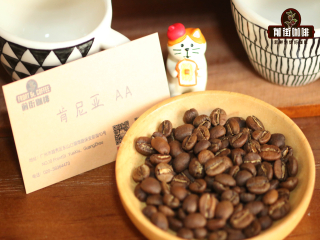
Kenyan coffee bean grading system description of flavor and taste of Kenyan AA TOP grade coffee
Professional baristas please follow the coffee workshop (Wechat official account cafe_style) the Kenyan coffee grading system is set up under the government-led policy of managing quality and mentoring coffee farmers. After the coffee is harvested, it is the official unit set up by the government, the Kenya Coffee Bureau (CoffeeBo).